ACT Math study guide · Chapter 58
Additional Practice Test 1
This form follows a broadly balanced current-enhanced mix and rises in difficulty overall. It begins with quick core points, introduces more representation changes through the middle, and ends with several higher-demand items that require choosing a relationship before calculating. Local variation remains possible, so question position should guide pacing only broadly, not determine how much time any one item deserves.
Time: 50 minutes. Questions: 45. Calculator permitted throughout.
Work in order unless a question becomes locally expensive. Choose the best answer and move on when the route is not developing. Do not leave any question unanswered. A useful pacing checkpoint is roughly 15 questions complete by 14–16 minutes and roughly 30 complete by 31–34 minutes, preserving 16–19 minutes for the final 15.
▸ Questions
Question 1
- A. $18
- B. $47
- C. $54
- D. $60
Question 2
- F. 7
- G. 9
- H. 11
- J. 13
Question 3
- A. 10
- B. 9
- C. 11
- D. 40
Question 4
- F. 5
- G. 1
- H. 8
- J. 13
Question 5
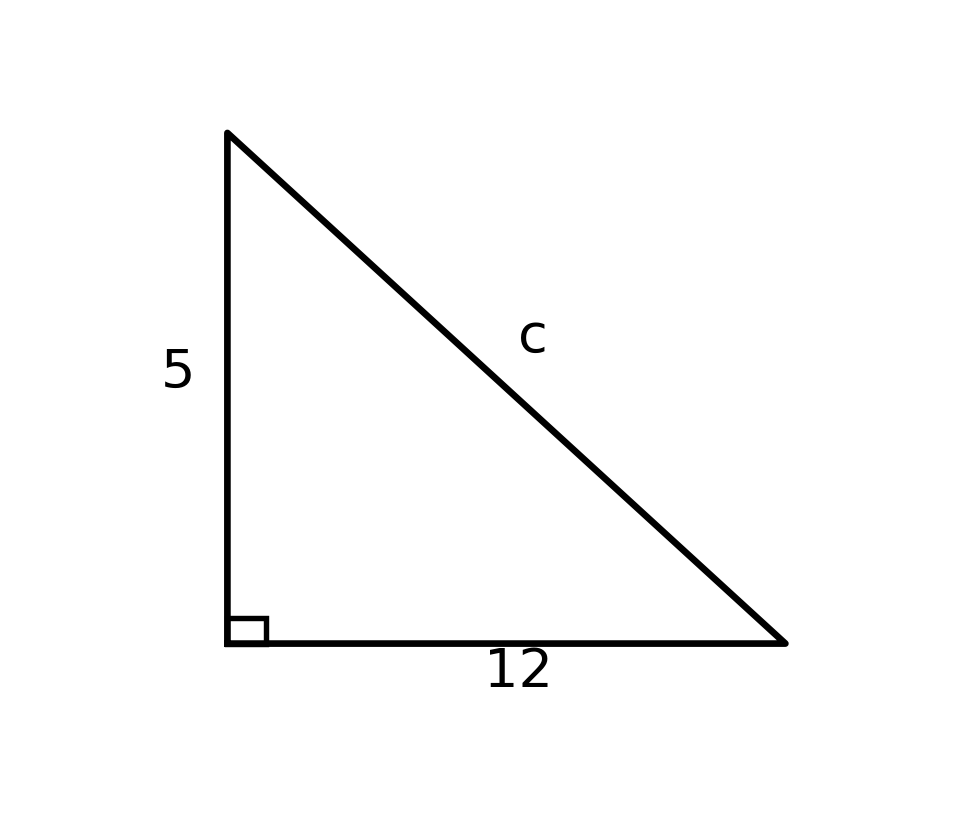
- A. 15
- B. 13
- C. 17
- D. 25
Question 6
- F. x¹⁵
- G. x⁸
- H. 2x⁸
- J. x²
Question 7
- A. 224
- B. 260
- C. 336
- D. 280
Question 8
- F. x < −4
- G. x > −4
- H. x < 4
- J. x > 4
Question 9
- A. (−4, −3)
- B. (4, 3)
- C. (−4, 3)
- D. (3, 4)
Question 10
- F. 10
- G. 14
- H. 18
- J. 24
Question 11
- A. 1/3
- B. 3/5
- C. 1/4
- D. 5/12
Question 12
- F. 1
- G. i
- H. −i
- J. −1
Question 13
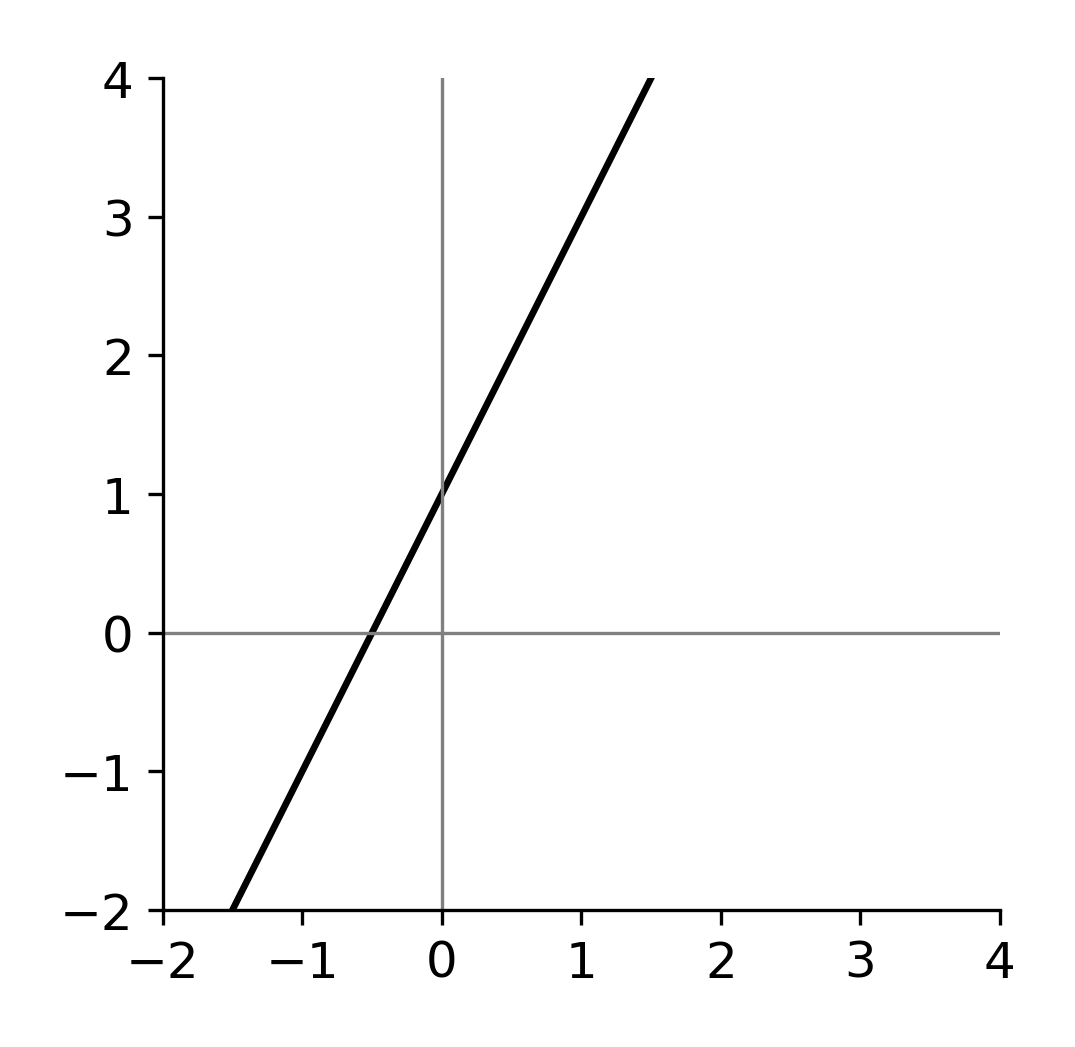
- A. Its y-intercept is 1.
- B. Its slope is 1/2.
- C. It is decreasing.
- D. It passes through (1, 1).
Question 14
- F. 2w+3
- G. 2w(w+3)
- H. w(2w+3)
- J. w²+3
Question 15
- A. 2
- B. 25
- C. √24
- D. 5
Question 16
- F. 12%
- G. 13%
- H. 15%
- J. 20%
Question 17
- A. 0.125
- B. √18
- C. 7/9
- D. √49
Question 18
- F. The study method caused the difference in these volunteers.
- G. The study method is effective for every student.
- H. The groups were observational only.
- J. No causal conclusion is possible from random assignment.
Question 19
- A. 5
- B. 3
- C. 4
- D. 6
Question 20
- F. (x−2)(x+5)
- G. (x+2)(x+5)
- H. (x+2)(x−5)
- J. (x−2)(x−5)
Question 21
- A. 45 ft²
- B. 270 ft²
- C. 90 ft²
- D. 540 ft²
Question 22
- F. 2/5
- G. 3/4
- H. 5/3
- J. 4/5
Question 23
- A. 9
- B. 3
- C. 6
- D. 36
Question 24
- F. 102
- G. 97
- H. 107
- J. 112
Question 25
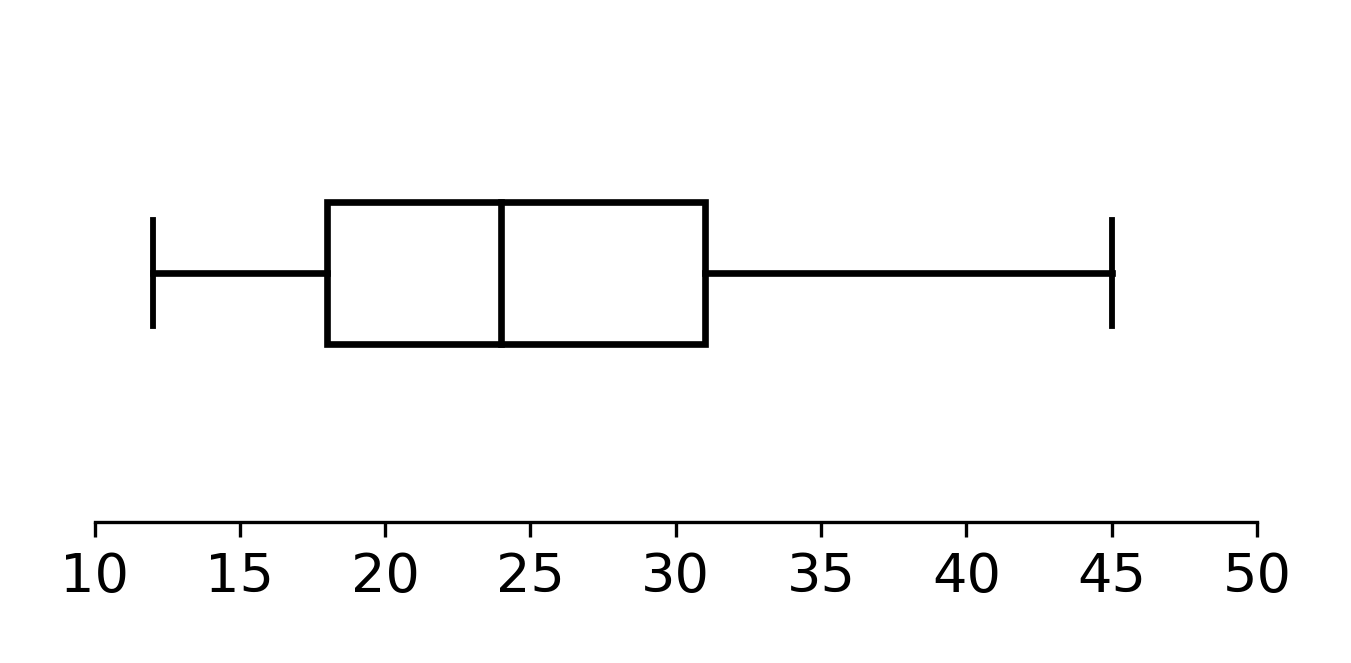
- A. 19
- B. 27
- C. 33
- D. 13
Question 26
- F. 1−i
- G. 5+i
- H. 1+5i
- J. 5−i
Question 27
- A. 300
- B. 200
- C. 250
- D. 500
Question 28
- F. 0
- G. 6
- H. 3
- J. 9
Question 29
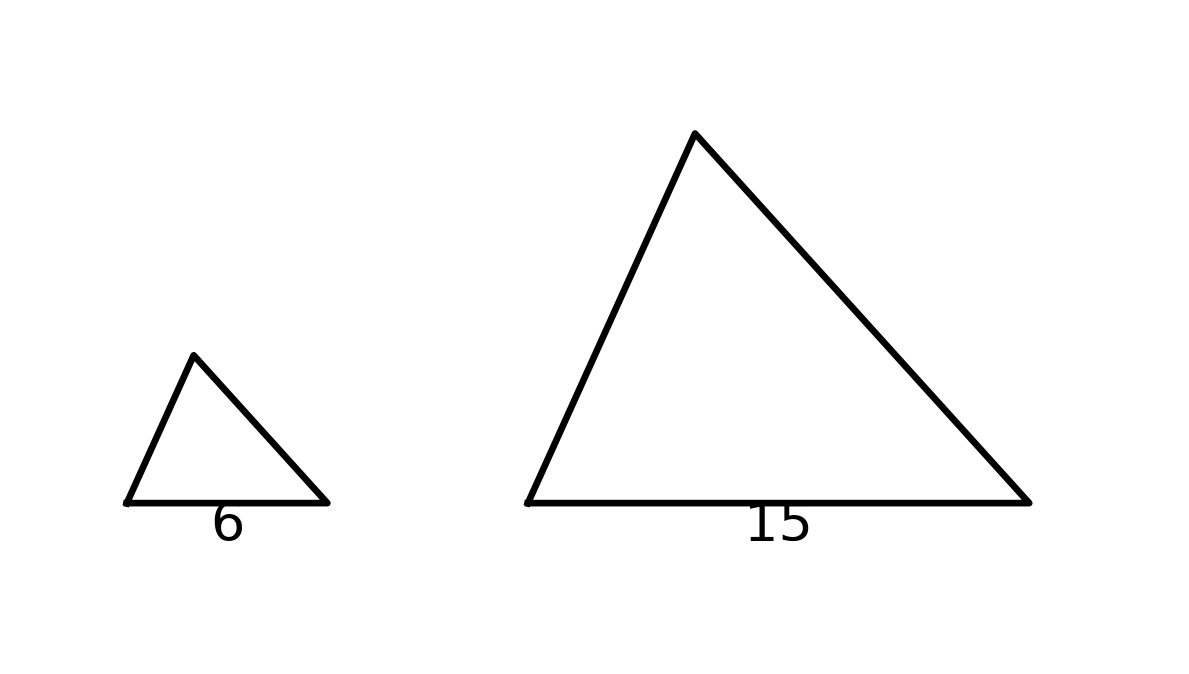
- A. 60
- B. 150
- C. 96
- D. 120
Question 30
- F. 5.0
- G. 7.5
- H. 6.25
- J. 8.0
31. The table shows values of a linear function. What is f(10)?
| x | f(x) |
|---|---|
| 1 | 11 |
| 4 | 17 |
| 7 | 23 |
A) 23
B) 27
C) 31
D) 29
Question 32
- F. 3π
- G. 8π
- H. 12π
- J. 6π
Question 33
- A. 10
- B. 25
- C. 32
- D. 64
Question 34
- F. x−4
- G. x+4
- H. x²+4
- J. 1
Question 35
- A. 1
- B. 5
- C. 2
- D. 10
Question 36
- F. 90π
- G. 30π
- H. 60π
- J. 180π
Question 37
- A. $882
- B. $828
- C. $846
- D. $936
Question 38
- F. x=7 only
- G. x=7 or x=−2
- H. x=−2 only
- J. x=2 or x=−7
Question 39
- A. 63
- B. 96
- C. 189
- D. 192
Question 40
- F. 10 sin40/sin65
- G. 10 cos65/cos40
- H. 10 tan65/tan40
- J. 10 sin65/sin40
Question 41
- A. 49%
- B. 52%
- C. 55%
- D. 57%
Question 42
- F. (x−1)²(x−4)
- G. (x+1)(x−4)(x−1)
- H. (x−1)(x−2)²
- J. (x+1)(x−2)(x+2)
Question 43
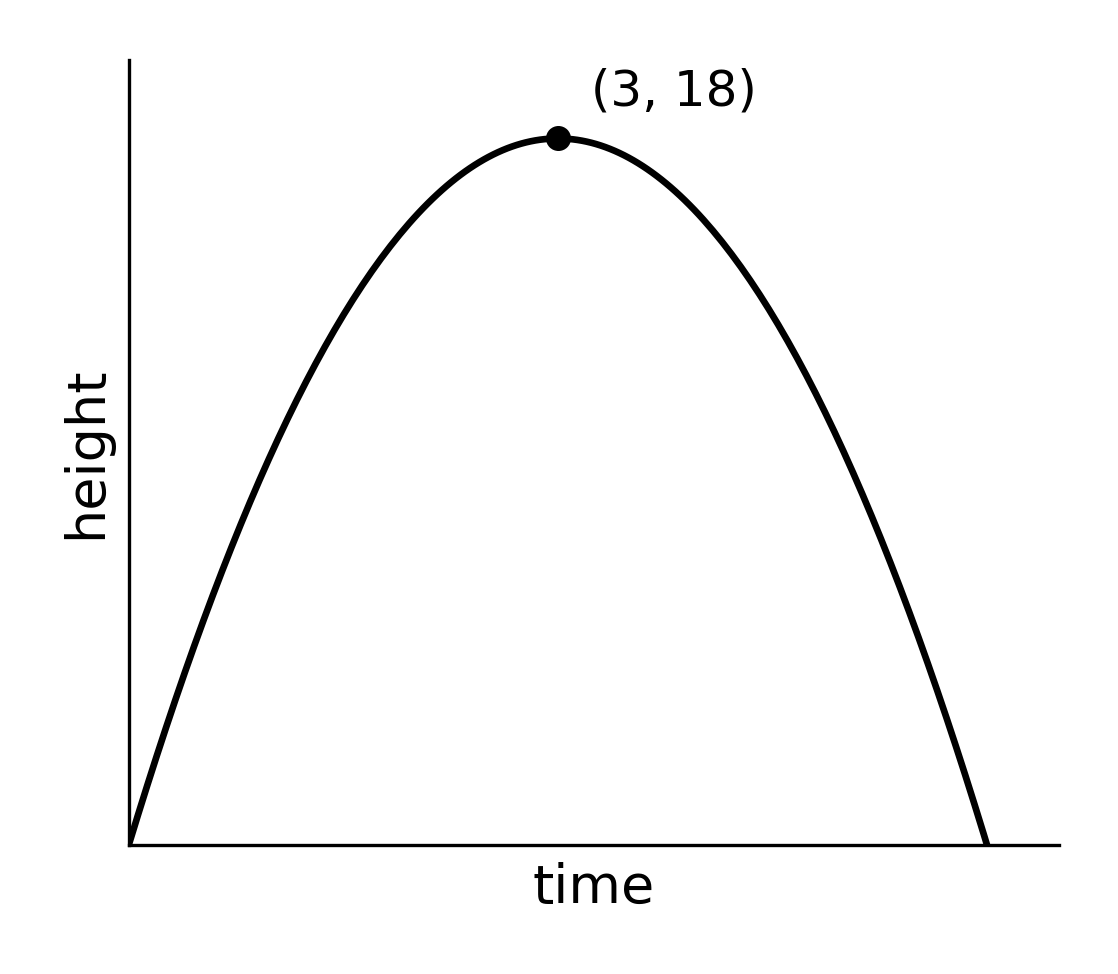
- A. 3
- B. 21
- C. 18
- D. 36
Question 44
- F. 24
- G. 18
- H. 30
- J. 37.5
Question 45
- A. 1/2
- B. −1/2
- C. 2
- D. −2
▸ Answers and Explanations
Show the answers and explanations
1: C. A 25% discount means paying 75% of the original price: 72(0.75)=$54. The requested object is the final sale price, not the discount amount.
2: G. Add 7 to both sides: 3x=27, so x=9.
3: A. The sum is 40 and there are 4 values, so the mean is 40/4=10.
4: F. Substitute x=2: 2(2²)−3=8−3=5.
5: B. By the Pythagorean theorem: c=√(5²+12²)=√169=13.
6: G. For the same base, add exponents when multiplying: x^(3+5)=x⁸.
7: D. The unit rate is 168/3=56 miles per hour. In 5 hours the car travels 56(5)=280 miles.
8: F. Subtract 5 from both sides: −2x>8. Dividing by −2 reverses the inequality: x<−4.
9: B. Reflecting across the x-axis keeps x the same and changes the sign of y: (4,−3)→(4,3).
10: H. Evaluate inside first: g(2)=2+4=6. Then h(6)=3(6)=18.
11: C. There are 12 marbles total and 3 are blue, so P(blue)=3/12=1/4.
12: J. Powers of i repeat every 4. Since 18 leaves remainder 2 when divided by 4, i¹⁸=i²=−1.
13: A. In slope-intercept form y=mx+b, the y-intercept is b=1. The slope is 2, so the graph increases, and at x=1 the y-value is 3, not 1.
14: H. Length=2w+3, so area=width×length=w(2w+3). This is a setup item; do not calculate a number that was never asked for.
15: D. Circle form is (x−h)²+(y−k)²=r². Here r²=25, so r=5.
16: H. The increase is 92−80=12. Dividing by the original value: 12/80=0.15=15%.
17: B. √18=3√2, which is irrational since 18 is not a perfect square. The other three values are all rational.
18: F. Random assignment supports a causal conclusion for this study's sample. It does not automatically justify generalizing to every student, since the volunteers were not described as a random sample of all students.
19: A. Adding the two equations eliminates y: 3x=15, so x=5.
20: H. A zero at −2 gives the factor (x+2); a zero at 5 gives the factor (x−5).
21: B. The actual dimensions are 2.5(6)=15 ft and 3(6)=18 ft. Area=15×18=270 ft². A common error is applying the linear scale factor only once to an area calculation.
22: J. Using sin²θ+cos²θ=1: cos²θ=1−9/25=16/25, so cosθ=4/5 (positive for an acute angle).
23: A. Exactly one real solution means the discriminant equals 0: (−6)²−4(1)(k)=0, so 36−4k=0, giving k=9.
24: F. aₙ=a₁+(n−1)d: a₂₀=7+19(5)=7+95=102.
25: D. IQR=Q3−Q1=31−18=13.
26: J. Distribute: (3+2i)(1−i)=3−3i+2i−2i²=3−i+2=5−i.
27: A. Set the costs equal: 25+0.08t=40+0.03t. Then 0.05t=15, so t=300.
28: G. Factor: (x−3)(x+3)/(x−3)=x+3 for x≠3. The missing point occurs at x=3, giving y=3+3=6.
29: B. The linear scale factor is 15/6=2.5. Area scales by the square of that factor: 24(2.5²)=24(6.25)=150.
30: H. Scale by 20/8=2.5: 2.5 cups × 2.5=6.25 cups.
31: D. From the table, y increases by 6 when x increases by 3, so the slope is 2. Using the point (1,11): f(x)=2x+9. Thus f(10)=2(10)+9=29.
32: J. Arc length=(135/360)(2π·8)=(3/8)(16π)=6π.
33: C. log₂(x)=5 means 2⁵=x, so x=32.
34: G. Factor the numerator: (x−4)(x+4). Cancel x−4 for x≠4, leaving x+4.
35: C. z=(80−70)/5=10/5=2.
36: F. V=πr²h=π(3)²(10)=90π.
37: A. Regular pay=40(18)=720. Overtime rate=1.5(18)=27, and overtime pay=6(27)=162. Total=720+162=882.
38: G. Two cases: 2x−5=9 gives x=7; 2x−5=−9 gives x=−2.
39: C. The terms are 3,6,12,24,48,96. Their sum is 189, which also follows from Sₙ=a(1−rⁿ)/(1−r).
40: J. By the Law of Sines, a/sin A=b/sin B. Solving for b gives b=10 sin(65°)/sin(40°).
41: D. The plausible interval is 52%−4%=48% to 52%+4%=56%. Since 57% lies outside that interval, it is the value not consistent with the reported margin of error.
42: G. Factor by grouping: x²(x−4)−1(x−4)=(x²−1)(x−4)=(x−1)(x+1)(x−4).
43: C. The function is in vertex form. The vertex is (3,18), and since the leading coefficient is negative, this vertex is a maximum. Maximum height=18 feet.
44: F. Full volume=4×3×2.5=30 ft³. At 80% full: 0.8(30)=24 ft³.
45: B. The radius from the origin to (2,4) has slope 4/2=2. A tangent line is perpendicular to the radius at the point of tangency, so its slope is the negative reciprocal, −1/2.