Nonlinear functions: notation, transformations, composition, and inverses
A function is a rule that turns each input into exactly one output. Almost every question about one is really a question about reading that rule: forward, backward, or off a graph.
A function is a dependable machine: feed it an input, and it returns exactly one output, every time. The notation is just a name for that machine and the value it produces; read it aloud as "f of x," the output of the rule when the input is . The single most important thing to settle at the start is what that notation does not mean: is not multiplied by . It is one indivisible symbol for an output value, and reading it as a product is the source of more confusion than any other single habit in this domain.
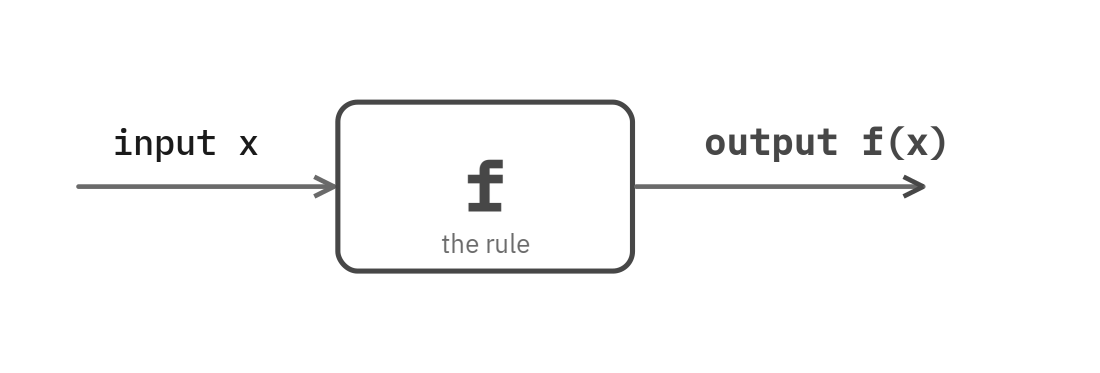
Figure 1. A function takes each input to exactly one output. The notation names that output; it is not times .
Interpret function notation and evaluate outputs
To evaluate a function is to run the machine: wherever you see the input variable in the rule, substitute the value you are given. The substitution is mechanical, and it works just as cleanly for an expression as for a number.
Worked example: evaluate
At a number, replace every with that number:
At a negative input, the parentheses keep the signs straight:
Substituting an expression works the same way, as long as you wrap it in parentheses and expand carefully. For the same , the value comes from replacing with the whole quantity : . The test uses this step often to see whether you treat as a genuine rule rather than a label.
Find outputs from inputs and inputs from outputs
Every function can be read in two directions, exactly as the linear models of the last domain were. Forward is evaluation: given an input, produce the output. Backward is the reverse: given an output, find the input that produces it, which means setting the rule equal to that output and solving.
Worked example: forward and backward with
Forward: the output at 4 is .
Backward: the input giving output 10. Set , so , giving and .
Forward substitutes; backward solves. Confusing the two is the same requested-object error seen throughout this book, now applied to function notation.
Read zeros, extrema, inputs, and outputs from a function graph
A graph is a function drawn, and reading values off it is the same two-directional skill made visual. The value is the height of the curve above the input : go up from on the horizontal axis to the curve, then across to the vertical axis to read the output.
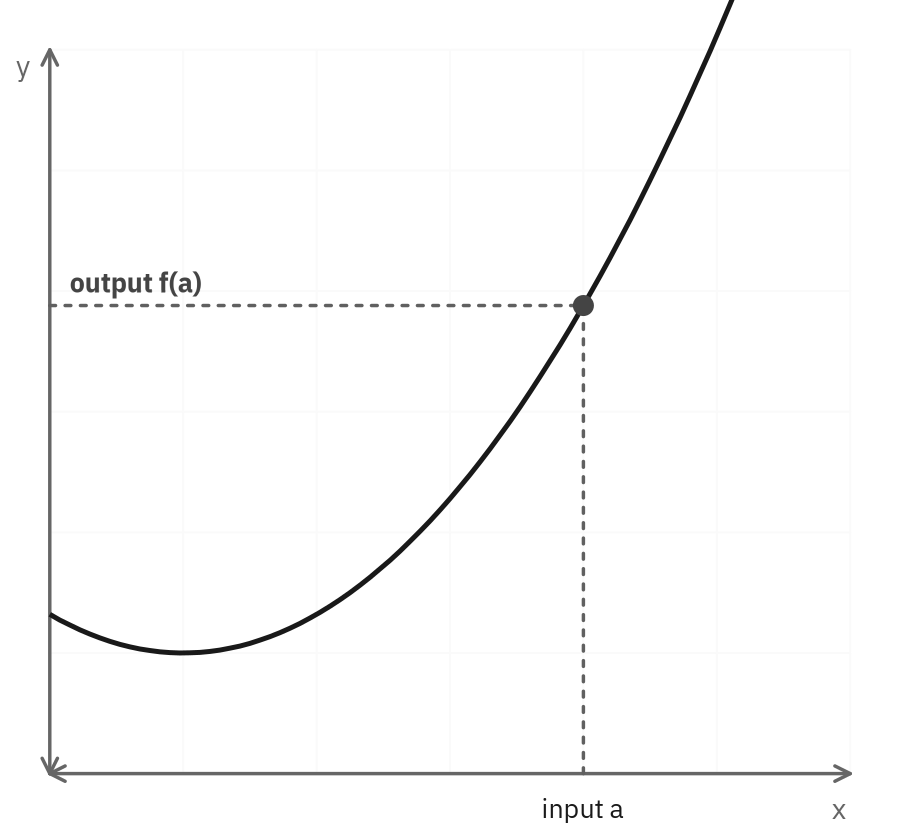
Figure 2. To read from a graph: up from the input to the curve, then across to the output. Backward reading reverses the path.
Backward reading reverses that path. To solve from a graph, start at the height on the vertical axis, go across to the curve, and drop down to read the input. Note that a curve can reach the same height at more than one input, so may have several solutions, one for each crossing. A table is read the same way: scan the output row to a value and read the matching input above it. Zeros are the inputs where the height is 0, the points where the curve meets the horizontal axis, and a minimum or maximum (an extremum) is the lowest or highest height the curve reaches.
Determine domain and range from equations and graphs
Two sets describe where a function is allowed to live. The domain is the set of inputs the rule accepts; the range is the set of outputs it can produce. Most functions accept every real number, but two situations carve out exceptions you must watch for: a denominator may not be zero, and the quantity under an even root may not be negative.
Worked example: finding a domain
is undefined where the denominator is zero, at . Its domain is every real number except 2.
requires the inside to be nonnegative: , so the domain is .
In each case the domain is the whole line minus the inputs the rule cannot accept.
The range is read most reliably from a graph: it is the full span of heights the curve actually reaches. For , every output is zero or positive, so the range is ; the graph never dips below the horizontal axis. A graph with a definite left and right edge has a bounded domain as well, read straight off the horizontal extent.
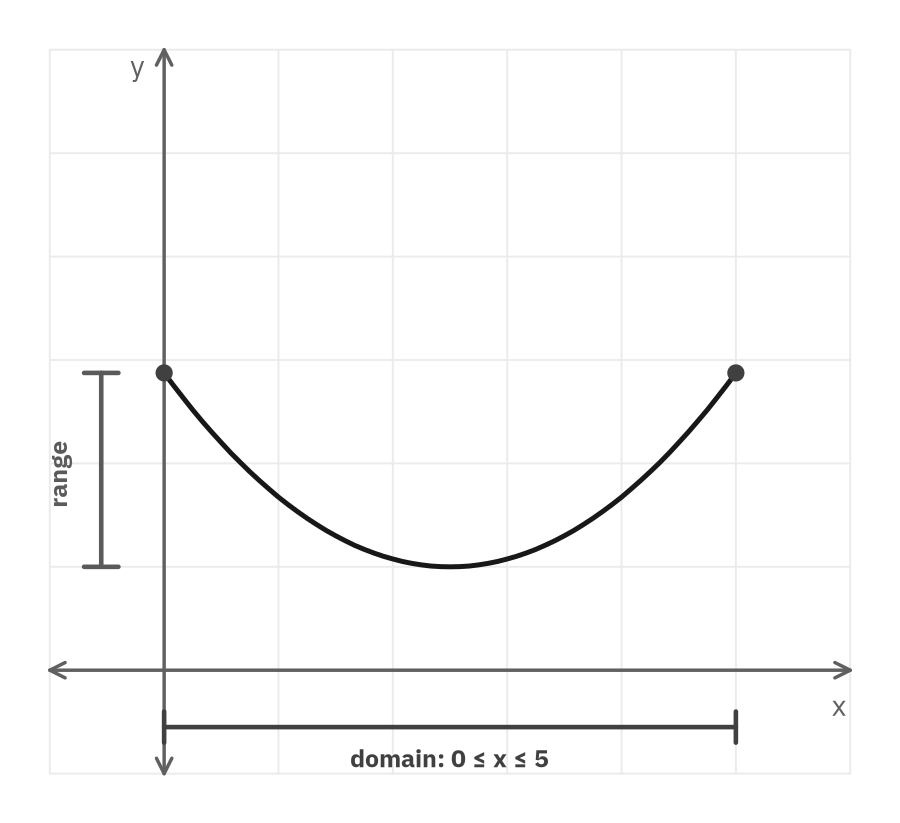
Figure 3. Domain is the horizontal extent of the graph; range is the vertical extent, the inputs used and the outputs reached.
Evaluate composite functions
Function composition extends the same input-output notation used throughout this chapter. Treat it as a secondary skill rather than a major standalone topic.
Functions can be chained: the output of one becomes the input of the next. The composition means do first, then feed its result into ; work from the inside out. Evaluating at a number is a two-step substitution.
Worked example: compose and
To find , evaluate the inner function first:
, then .
As an expression, substitutes the whole rule into :
.
Order matters, and it is worth seeing why with the same two functions. Reversing them, , gives first, then , a different result from the 2 above. In general and are not the same function, so the inner and outer functions must be read in the correct order.
Find inverse functions and interpret reversed input-output relationships
Reading a function backward, finding the input that produces a given output, is a skill you already have. An inverse function is that backward reading given its own notation and its own name. If takes to , its inverse, written , takes back to . The two rules undo each other completely:
and
The notation is not an exponent; it never means . It names the reverse machine, the rule that takes 's output and hands back 's input. Finding for a specific number does not require building the whole inverse rule: it only asks which input produces the output , the same backward reading from earlier in this chapter, written with notation.
Backward input-output reading can be used without constructing a full inverse rule. Full inverse construction is supporting function fluency rather than a separately named College Board testing point, so it should receive less practice weight than function evaluation, graph interpretation, and nonlinear-feature questions.
Worked example: find for
asks: which input gives an output of 18? Set the rule equal to 18 and solve.
So . No inverse formula was ever built; the backward-reading habit did the whole job.
When a question wants the full inverse rule rather than a single value, the method is only a small extension: write , swap and , and solve the new equation for .
Worked example: build the inverse rule for
Write , then swap the letters: .
Solve for : , so .
Check it against the earlier result: , the same answer found by backward reading alone.
Not every function has an inverse that is itself a function; a rule that sends two different inputs to the same output, like , cannot be reversed without ambiguity, since the inverse would not know which input to return to. For this course, inverse examples are limited to functions that are one-to-one on the stated domain, and the emphasis stays on backward input-output reasoning.
Apply function translations, reflections, and stretches
Once you know the graph of , a family of related graphs comes for free, because small changes to the rule move the graph in predictable ways. Two of these are shifts, and one of them is famously counterintuitive.
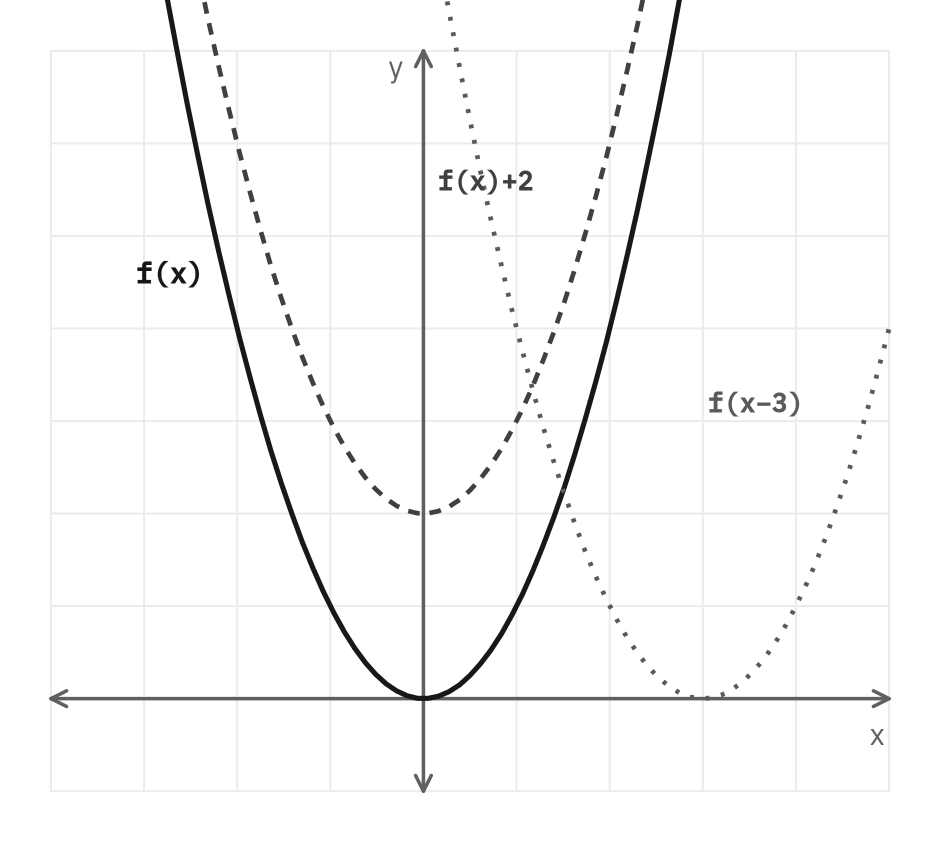
Figure 4. Adding a constant outside the function shifts it up; subtracting inside the function shifts it right.
Adding a constant outside the function moves the graph vertically: shifts it up by (down, if is negative). Changing the input inside the function moves it horizontally, and against intuition, shifts the graph to the right by , while shifts it left. For , the same output occurs when the input is units larger, so the graph shifts right by .
Reflections and stretches round out the family. Negating the whole function, , flips the graph over the horizontal axis; negating the input, , flips it over the vertical axis. Multiplying the function by a constant greater than one, , stretches it vertically.
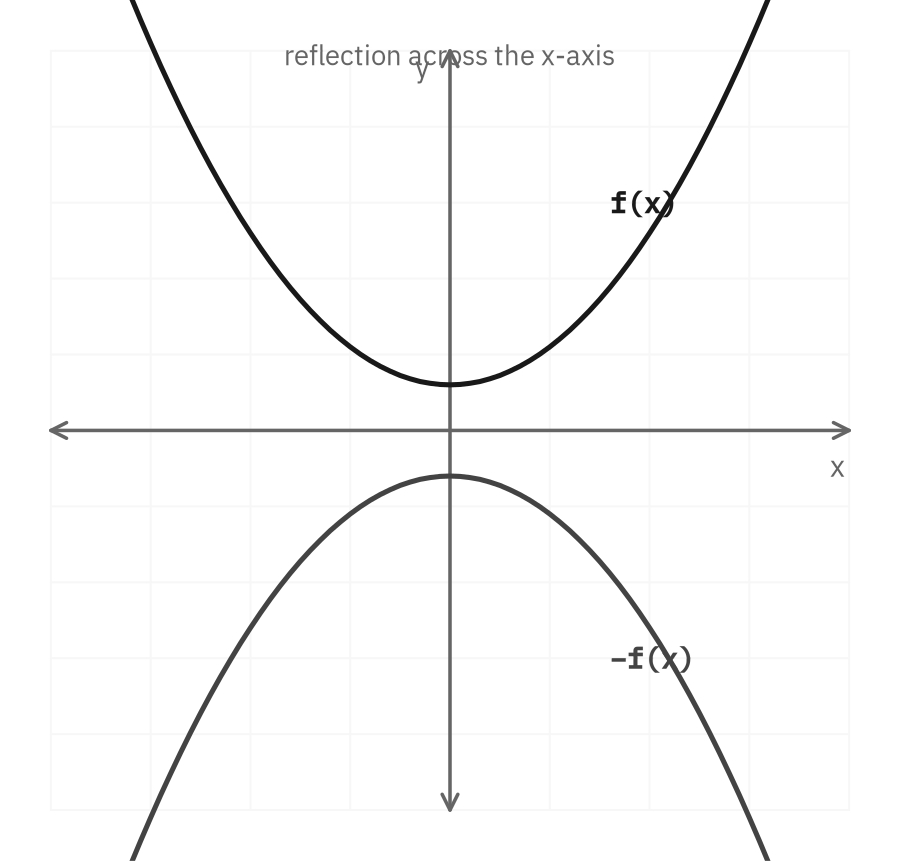
Figure 5. Negating the whole function reflects the graph across the x-axis; every height flips sign.
Function transformations
: shift up by (down if ).
: shift right by (the sign reads backward); shifts left.
: reflect across the horizontal axis; : reflect across the vertical axis.
: stretch vertically by a factor of .
Worked example: transfer a known point through a transformation
If the point lies on , what point lies on ?
The transformation shifts every point right 3 and up 4. Apply the same shift to the known point:
This works for any transformation once the point on the original graph is known; move the coordinates exactly as the rule moves the graph, and the algebraic form of never needs to be known at all.
Graph an absolute value function as a transformed V
The graph of is a V with its point, its vertex, at the origin: the output is never negative, and it grows at the same rate in both directions from that point. The form shifts, stretches, or reflects the parent graph . In , and slide the vertex to , exactly as with any other function, and stretches the V vertically, or flips it upside down if is negative.
For , the vertex sits at , and the graph is symmetric about the vertical line through it: inputs equally spaced on either side of 2 produce equal outputs, since . Reading a vertex directly from the equation, rather than plotting points, is the fast route on any question that only asks where the minimum occurs. When is negative the V opens downward and the vertex is a maximum instead.
Evaluate piecewise functions on the correct interval
A scope note: piecewise functions are not a named current Digital SAT testing point. This section is brief enrichment; if study time is limited, the quadratic, exponential, and polynomial function work surrounding it deserves priority.
Some functions are assembled from more than one rule, each governing a different stretch of inputs. To evaluate such a piecewise function, the only new step is choosing the correct piece: find which interval the input falls into, then apply that interval's rule and ignore the others.
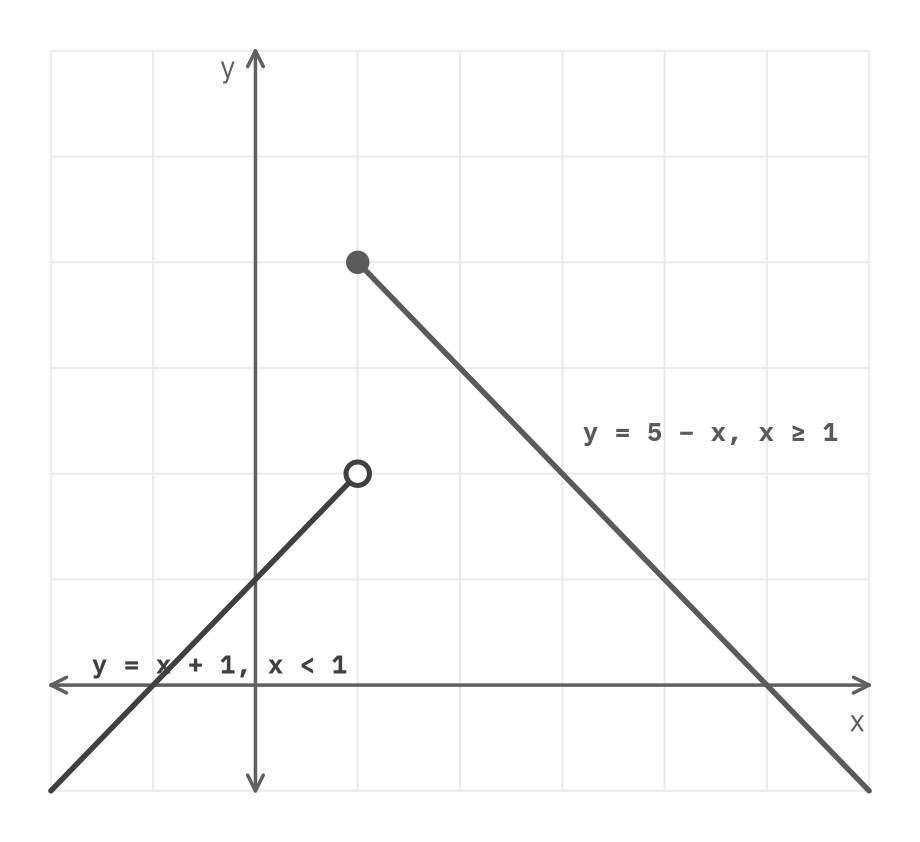
Figure 6. A piecewise function uses different rules on different intervals. A closed dot includes the endpoint; an open dot excludes it.
Worked example: evaluate a piecewise function
Let for , and for .
: since , use the first rule: .
: since , use the second rule: .
The boundary input 1 belongs to whichever piece the "or equal to" attaches it to: here the second, marked by the closed dot.
Interpret function values and parameters in context
In a word problem a function carries meaning exactly as a linear model did, only now the relationship may bend. The notation still reads the same way: is the cost at twenty units, is the height at three seconds. The two-directional habit transfers without change: a question asking "how much" wants a forward evaluation, while one asking "when" or "how many units" wants the backward solve. Identify whether the question gives an input or an output, then solve for the requested quantity.
Solve a function equation for the input
A backward question sometimes lands you on an equation that is not linear, and solving it can produce more than one input. When that happens, the question is often built around a quadratic hiding inside a function rule.
Worked example: find the sum of all for which
, and .
Treat as an equation to solve, exactly like any backward question, substituting for :
The two solutions are and , so their sum is 3. A quadratic's sum of roots, , gives the same 3 directly, without factoring at all: .
The trap here is treating as a label rather than an instruction. It is a full equation the moment a specific output is given, and it deserves the same solving tools, factoring, the quadratic formula, or the root-sum shortcut, as any other quadratic.
Chapter summary
A function is a rule that sends each input to one output, and names that output, never a product. Reading one is the same two-directional habit you already own: forward to evaluate, backward to solve, whether the rule arrives as symbols, a graph, or a table. Around that core sit a few reliable extras: the domain's forbidden inputs, the range's reachable outputs, composition worked inside-out, the transformations that slide and flip a graph, and the backward reading that recovers an input from a known output. Keep the machine picture in mind and the notation stops being a wall and becomes what it is: a clear, compact way to say do the rule.