Percentages
A percent is a ratio out of one hundred, and most percent questions are one multiplication. The work that earns points is reading which number plays which role, and, often, running the change backward.
A percent is a ratio per : percent means out of . That makes every percent a special case of the proportional reasoning from the last unit, and it means percent questions are usually a single multiplication once you have read them correctly. The points are earned not in the arithmetic but in the setup: deciding which quantity is the whole, whether you are finding a part or working back to the whole, and whether a change should be applied or undone. We build from the plain calculation toward the two situations that catch careful readers: reversing a change, and stacking two changes in a row.
Interpret percent as a rate per 100
Because a percent is a ratio over , you can move freely between three forms (percent, decimal, and fraction), and choosing the easiest form for a given calculation is half the skill. To turn a percent into a decimal, divide by (move the point two places left); to turn a decimal into a percent, do the reverse.
Fractions, decimals, and percents
.
.
. A fraction becomes a percent by writing it over .
Compute a percent of a quantity
The most basic percent calculation is finding a percent of a quantity, and the word "of" is the instruction: it means multiply. To find percent of a number, convert the percent to a decimal and multiply.
Worked example: compute a percent of a quantity
What is percent of ? Convert and multiply: .
Going the other way, to ask what percent one number is of another, divide and convert: is of .
One quiet fact saves time: a percent of a number is symmetric. Twenty-five percent of equals eighty percent of ; both are , because multiplication does not care about order. When one direction looks ugly, the other is sometimes clean.
A harder version compares two percents of the same base rather than a percent of a plain number, and the base itself never needs a value, since it cancels.
Worked example: compare two percents of a shared base
is percent of . is percent of . is what percent of ?
Write both in terms of the shared base , then divide; cancels out completely: , , so .
is percent of . The value of was never needed, only the ratio between the two percents; assigning a convenient number, such as , reaches the same answer for anyone who prefers concrete numbers to letters.
Compute percent change using the original value as the base
A percent change measures how much a quantity grew or shrank, always relative to where it started. The rule is to put the amount of change over the original value, then convert to a percent. The single most common error is dividing by the new value instead of the original: the percent change is always measured against the starting amount.
Worked example: compute a percent change
A price rises from to . The change is , and the original is : increase.
A quantity that falls from to has change over the original : , a percent decrease.
Notice the two are not the same percent, even though the amounts moved by the same , because the originals differ.
Translate percent comparisons into multiplicative factors
Phrases like "30 percent more than" and "15 percent less than" are best handled as a single factor. Increasing by percent multiplies by ; decreasing by percent multiplies by . Turning the words into one factor avoids the two-step "find the part, then add it" and is far less error-prone.
Worked example: apply a more-or-less change
A number that is percent more than is multiplied by : .
A number that is percent less than is multiplied by : .
The factor does the addition or subtraction for you in one stroke.
Recover an original quantity from a percent change
Here is the situation that separates careful readers from quick ones. Often you are told the amount after a percent change and asked for the original: "after a discount, the price is sixty dollars; what was it before?" The mistake is to take the percent of the final amount. The correct move is to recognize the final amount as the result of multiplying the original by a factor, and then divide by that factor to undo it.
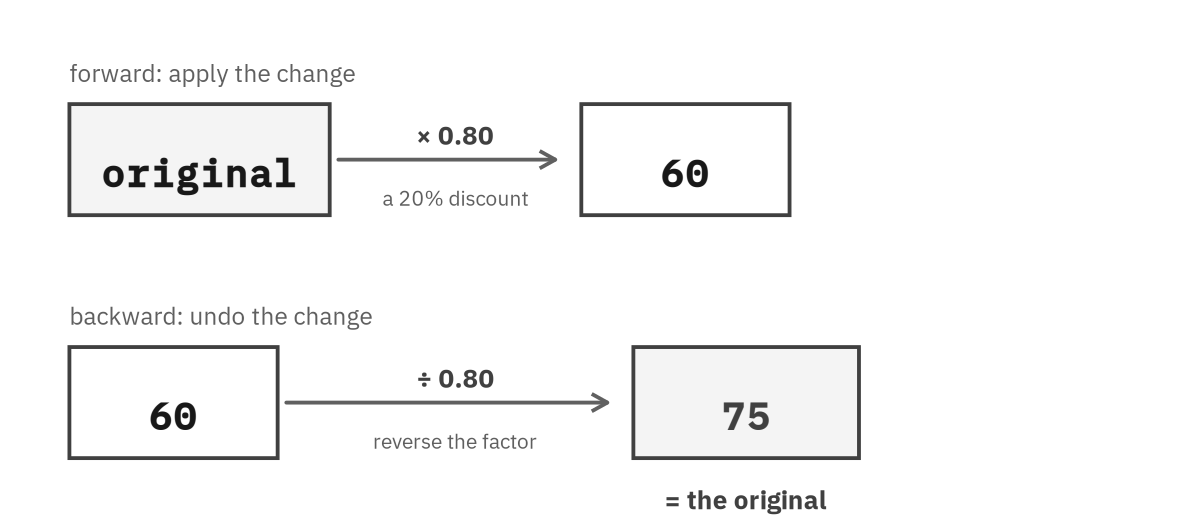
Figure 1. To undo a percent change, divide by the factor that produced it; do not take the percent of the final amount.
Worked example: recover the original
After a percent discount, a coat costs $60. The sale price is percent of the original, so , which gives dollars.
The same logic recovers a number after a markup: if a number increased by percent equals , then , so .
Taking percent of would give the wrong answer, because the discount was percent of the larger original, not of the sale price.
Combine successive percent changes multiplicatively
When two percent changes happen one after another, you cannot simply add the percents, because the second change acts on the new amount, not the original. Instead you multiply the two factors together. The classic case shows why it matters: a percent increase followed by a percent decrease does not return to the start.
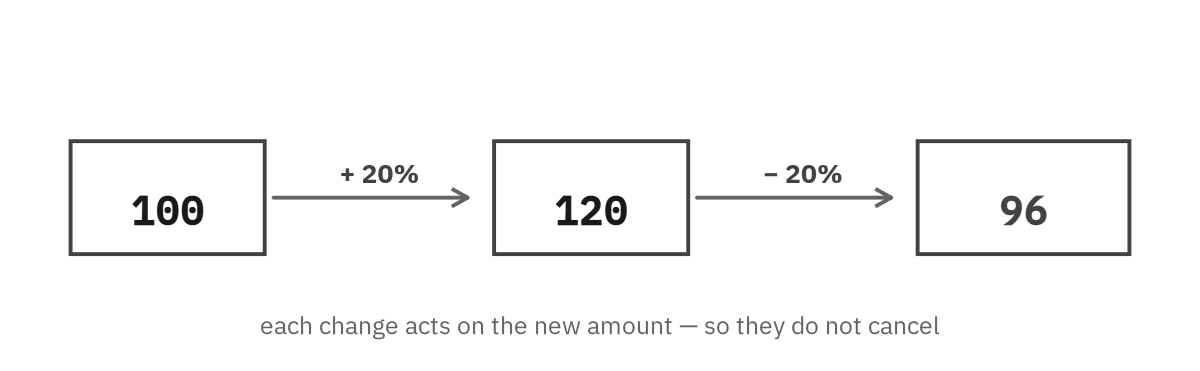
Figure 2. Two changes in a row multiply their factors. A rise then a fall lands at , not back at .
Worked example: stack two changes
Start at , increase by percent, then decrease the result by percent: .
The result is , not , because the percent decrease was taken on , not on .
A markup then a discount works the same way: a $50 item marked up percent then discounted percent is dollars.
Distinguish percentage-point change from percent change
One distinction the test prizes: a change measured in percentage points is not the same as a percent change. If an interest rate goes from percent to percent, it rose by percentage points, the plain difference. But as a percent change, it rose by percent, because the -point increase is measured against the original . The two answers describe the same shift, but they are different numbers, and the question's wording tells you which it wants.
Model percent relationships in context
The everyday uses are all the same factor reasoning. A tax of percent multiplies a bill by , so an $80 purchase costs dollars. A percent tip on a $60 bill makes the total dollars. A discount multiplies by less than one; a markup, by more than one. And when changes repeat over many periods rather than just once or twice, the factor is raised to a power, the exponential growth you met in the previous domain. For one or two changes, multiply the factors directly; for many, reach for the exponent.
A checklist for percent questions
- Identify the whole (the base). It is the number after "of," or the original in a change.
- Turn "more than" and "less than" into one factor, or .
- If you are given the result and need the start, divide by the factor.
- For two changes in a row, multiply the factors; never add the percents.
- Check that the answer is sensible: a discount should lower the price, and a percent increase should raise it.
Summary. A percent is a ratio out of one hundred, so " percent of" is just multiplication by , and percent change is always the change measured against the original. Turn "more than" and "less than" into a single factor, or ; to recover an original from a final amount, divide by that factor rather than taking a percent of the result; and stack successive changes by multiplying their factors, never by adding the percents. Keep percentage points and percent change distinct. The arithmetic is light; the care is all in the setup.